Asset Finance in Australia: A Practical Guide for Businesses

Asset Finance in Australia: A Practical Guide for Businesses
If you run a business in Australia and need vehicles, equipment, or commercial property to operate, you've likely weighed up the cost of buying outright against the cost of financing. Asset finance is a specialised type of business lending designed to help you acquire exactly those physical assets without draining your bank account on day one. This guide breaks down every major structure, explains the real costs involved, and shows you how to choose the right option for your situation.
Asset finance explained for Australian businesses
Asset finance is a form of business funding where you borrow money (or enter a lease) specifically to acquire a physical asset, whether that's a vehicle, a piece of machinery, a commercial fit-out, or even a property. The asset itself typically serves as security for the loan, which is what separates it from a general-purpose business loan. Asset financing, then, is simply the process of arranging these deals: selecting the right structure, comparing lenders, and managing repayments over time.
The core appeal of asset finance options is straightforward. Instead of paying the full purchase price upfront, Australian businesses spread the cost across regular payments over a fixed period. This protects business cash flow, matches repayments to the useful life of the asset, and can unlock tax advantages such as depreciation deductions and GST credits depending on the structure chosen. For small to medium enterprises, asset finance can be an attractive alternative to purchasing outright with cash. It also enables businesses to quickly access newer equipment without a large upfront cash payment, preserving working capital for daily operations.
GEA Capital is a Melbourne-based, family-owned finance brokerage that helps businesses and individuals across Australia access a panel of lenders for asset finance, vehicle finance, equipment finance, and more. Rather than going to a single bank, working with a broker means you get competitive options compared side by side.
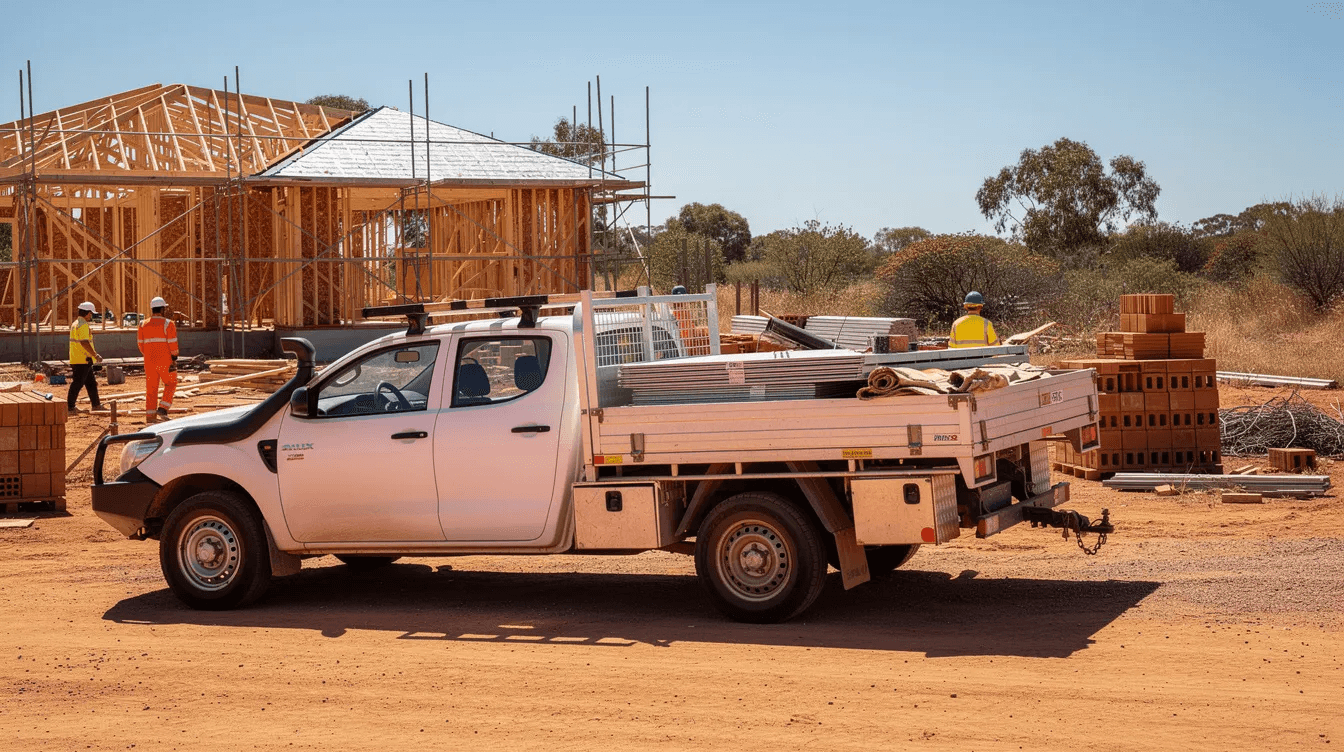
Here's a quick example to make this concrete. A Melbourne plumbing business wants to finance a ute and trailer package costing $65,000 (ex. GST) in 2026. Using a chattel mortgage with a five-year term and a 20% balloon payment (around $13,000 due at the end), the monthly payments at an indicative 6.5% p.a. rate would sit at roughly $1,080 to $1,200. The average loan amount for asset finance across Australia is around $73,000, so this scenario is squarely in the typical range. Asset finance can reduce cash flow pressure with smaller payments spread over time rather than one large hit.
How asset finance works step by step
The process of securing asset finance follows a logical path, and understanding each step removes much of the mystery.
It starts when your business identifies the asset it needs, whether that's a new truck, used excavator, or office fit-out. You then engage a broker like GEA Capital or approach a lender directly. The broker assesses your business needs, financial circumstances, and credit history, then recommends suitable structures. Next, you submit a loan application with supporting documents: business financials, proof of ABN and GST registration, and details about the asset. The finance provider assesses risk based on the asset's resale value, your credit profile, the loan term, and any deposit or balloon payment. Once approved, terms are locked in and settlement occurs: the lender pays the vendor, and you take possession of the asset. From there, you make regular payments (weekly, fortnightly, or monthly) until the end of the term, when you either own the asset outright, pay a residual, return it, or refinance.
Because the asset itself acts as asset security or collateral, lenders face lower risk than with unsecured lending. This generally means asset finance can lower interest rates compared to traditional unsecured loans. It can also serve as an additional line of credit beyond your existing facilities.
Terms for asset finance typically range from one to seven years for vehicles and equipment, with longer terms available for commercial property. Flexible loan structures in asset finance allow for structured payments, such as a balloon payment at the end of the term. A balloon reduces your monthly payments during the loan but increases the total cost of finance because the outstanding balance stays higher for longer. GEA Capital's role here is to compare lenders, explain the trade-offs of each structure, and manage paperwork for faster approvals.
What counts as an asset for finance?
In the lending context, an asset generally needs to be income-producing, durable, and carry some resale or trade-in value. It must be identifiable and in a condition acceptable to the lender. The stronger the used market for the asset type, the easier it is to finance and the better the terms you'll receive.
Asset finance is applicable across various types of assets including vehicles and machinery. Common examples for Australian businesses include:
Work utes, vans, and commercial vehicles
Trucks (rigid, prime movers, tippers)
Yellow plant and specialist plant such as excavators, loaders, and earthmoving equipment
Manufacturing and processing machinery
Medical and dental imaging equipment
IT equipment, office furniture, and commercial fit-outs
Commercial property (owner-occupied warehouses, offices, medical suites)
Hard assets like vehicles and heavy machinery are the easiest to finance because they have established resale markets. Software, loose furnishings, or components bundled into a fit-out can sometimes be financed as part of a larger package but are rarely financed on their own.
A few real-world scenarios: a WA earthmoving contractor financing two used excavators totalling $450,000 via chattel mortgage over five years; a regional GP clinic funding new imaging equipment worth $250,000 through a finance lease; or a Sydney café financing a full kitchen fit-out (ovens, refrigeration, benches) for $80,000 under hire purchase. Small businesses can borrow from $10,000 to $10,000,000 depending on the lender and the business asset being financed.
Main types of asset finance in Australia
Before diving into the detail of each structure, it helps to see the landscape at a glance. The major types of asset finance in Australia are:
Chattel mortgage - commonly used by SMEs and sole traders buying vehicles or equipment outright.
Hire purchase - a rent-to-own model popular with businesses wanting ownership after the final payment.
Finance lease - a longer-term lease where the business has most risks and rewards of ownership, with options at the end.
Operating lease - a shorter-term arrangement suited to assets that depreciate quickly or need frequent upgrading.
Novated lease - a salary-packaging arrangement for employee vehicles involving a three way agreement.
Sale-and-leaseback - where a business sells an existing asset to a lender and leases it back, freeing up cash.
Asset finance options include hire purchase and finance lease among the most widely used. Each structure differs in ownership timing, GST treatment, balance sheet impact, and end-of-term outcomes. Choosing the right one affects your income tax deductions, business cash flow, and long-term financial situation, so it pays to get tailored advice. GEA Capital helps match the structure to your specific business goals and tax position.
Chattel mortgage
A chattel mortgage is one of the most common business asset finance structures in Australia. Chattel mortgages are popular for vehicles and machinery, and they're particularly favoured by SMEs and sole traders who want to own the asset from day one.
Here's how it works: your business takes ownership of the asset immediately upon delivery. The lender holds a security interest (registered on the PPSR) over the asset until the finance is fully repaid. You make repayments over a fixed term at a fixed or variable interest rate. You can include an optional balloon payment at the end to reduce monthly instalments.
Typical use cases include work vehicles, trucks, plant, and machinery for small to medium Australian businesses wanting to purchase assets for revenue generation. Chattel mortgages are popular for vehicles and machinery in Australia specifically because the ownership-from-day-one structure allows immediate depreciation claims and upfront GST credits.
Key advantages and trade-offs:
Pros: Full ownership from settlement, ability to claim depreciation and interest as tax deductions, upfront GST credit, equity builds from the start.
Cons: The business takes on all maintenance costs and insurance obligations. Defaulting on asset finance can result in asset repossession. The asset sits on your balance sheet, which affects gearing ratios.
Current indicative rates for new equipment under chattel mortgage sit around 6.5-7% with used assets attracting higher rates. GEA Capital compares lenders across its panel to find competitive chattel mortgage rates and terms suited to your financial terms.
Hire purchase
Hire purchase is a rent-to-own structure often used for vehicles and equipment. Under hire purchase agreements, the finance provider owns the asset during the leasing period. The business makes regular payments, and hire purchase allows ownership after all payments are made, including any final residual amount.
The repayment profile is similar to a chattel mortgage: instalments cover interest and principal, and you can include a balloon payment to ease cash flow. Repayment flexibility extends to weekly, fortnightly, or monthly schedules. The upfront cost is typically a deposit (sometimes as low as zero for strong applicants).
In modern Australian purchase agreements, the business is responsible for running costs: repairs, maintenance costs, insurance, and registration. The finance provider owns the asset on paper, but the day-to-day obligations sit with you.
When does hire purchase suit better than a chattel mortgage? The differences can be subtle and often come down to accounting treatment and your accountant's preference for how the business asset appears on financial statements. Some businesses prefer the hire purchase structure for its simplicity or for the way depreciation and interest deductions are split. The best approach is to speak with GEA Capitals team and your accountant together to choose the structure that fits your financial situation.
Finance lease and operating lease
These two lease structures sit at opposite ends of the flexibility spectrum, and understanding the difference matters when you're deciding how to finance long term assets versus short-term needs.
Finance lease: A finance lease is a long-term rental arrangement where the finance provider owns the asset on title, but your business carries most of the risks and rewards of ownership. Finance leases require the business to maintain the asset, cover insurance, and bear obsolescence risk. At the end of the fixed term, you typically have options: pay a residual to take full ownership, refinance, or upgrade to a newer model. Lease payments are generally tax-deductible, simplifying the deduction process compared with claiming separate depreciation and interest. A transport company putting trucks on a five-year finance lease is a common example.
Operating lease: An operating lease is ideal for short term asset finance needs. It covers part of the asset's useful life, and the provider owns the asset throughout. At the end of the leasing period, you return it. This suits assets with rapid technology obsolescence, think IT servers on a three-year cycle or medical imaging equipment that needs regular upgrading. Monthly payments tend to be lower because you're not paying down the full purchase price, and running costs can sometimes be bundled in.
Both structures help manage technology obsolescence, preserve cash flow, and deliver predictable monthly costs for budgeting. The choice between them depends on whether you want the option to own the equipment outright at term end or prefer the flexibility to walk away and upgrade.
Novated lease for vehicles
A novated lease is a three way agreement between an employee, their employer, and a finance provider. It's structured so the employer agrees to deduct lease repayments from the employee's pre-tax salary and pay the finance provider directly.
Novated leases involve an employer, employee, and finance provider working together. The arrangement typically bundles the vehicle's purchase price with running costs such as fuel, registration, servicing, tyres, and insurance into one regular payment. This simplifies budgeting and can reduce taxable income through salary packaging, subject to ATO rules and fringe benefits tax obligations.
Novated leases are primarily used for employee vehicles rather than heavy equipment or specialist plant. GEA Capital can assist business owners and employees in structuring novated leases alongside other commercial asset finance facilities, ensuring the arrangement complements the broader business funding strategy.
Tax rules around novated leases can change. Always check with an independent tax adviser before committing to ensure the structure still delivers the benefits you expect.
Matching asset finance to your cash flow
For most small business owners, cash flow matters more than profit on paper. You can be profitable on your tax return and still not have enough cash to meet next week's payroll if your repayment structures are poorly timed.
The principle is simple: match the loan term to the asset's income-generating life. Financing long term assets like heavy machinery over a term that reflects their useful life avoids the risk of a maturity mismatch, where you're still paying for an asset that's no longer productive, or where short term liabilities are used to finance long term assets, straining your cash position.
Repayment frequency and balloon payments can be aligned to seasonal cash flow patterns. A regional transport company whose revenue peaks during harvest season, for example, might structure higher repayments during peak months and lower payments in quieter periods. This kind of repayment flexibility prevents cash flow stress during off-peak periods.
Using asset finance can help preserve working capital for daily operations, but it can also lead to cash flow issues if not managed properly. Asset finance can provide cash flow relief and potential tax advantages, but only when the repayment structure genuinely matches how money flows through the business. Before committing, always evaluate cash flow impact. GEA Capital models different repayment structures to show the real impact on your business cash flow before you sign anything.

Interest rates, fees, and total cost of asset financing
Understanding the total cost of an asset loan goes well beyond the headline interest rate. Here's what drives pricing in the Australian market right now.
What determines your rate:
The RBA cash rate (sitting around 4.35% as of mid-2026)
Lender risk appetite and competition
Asset type (new vs used assets, generic vs specialist)
Loan term and finance amount
Your credit profile and trading history
Deposit or balloon payment size
Realistic rate ranges (2024–2026): Interest rates for asset finance range from 6% to 15% p.a. for most business borrowers. Prime borrowers financing new vehicles or equipment under a chattel mortgage might see rates from around 5.5% to 8% p.a., while used or specialist equipment, startups, or businesses with bad credit could face rates toward the higher end. In the broadest sense, interest rates for asset finance range from 2% to 50% based on credit profile and lender type, though the vast majority of deals fall within the 6–15% corridor. Interest rates for asset refinance loans range from 2% to 15%.
Common fees to watch for:
Establishment or origination fees
Monthly account-keeping fees
PPSR registration fees
Early payout or termination fees
Documentation fees (especially for commercial property)
Valuation fees for larger or used assets
The critical number is total cost over the full loan term, including all interest, fees, and any lump sum balloon payment at the end. A low headline rate with high fees or a large residual can cost more than a slightly higher rate with no hidden extras. Depending on the structure, asset finance payments may be tax-deductible, which also affects the effective after-tax cost.
A broker like GEA Capital can negotiate sharper pricing across its lender panel and structure deals to minimise total interest and fees. In 2025, asset finance new business grew by 11% year-over-year across Australia, reflecting strong demand and increasing competition among asset finance companies and asset finance providers, which can work in your favour.
Asset finance for startups and for bad credit profiles
New businesses and those with a history of bad credit often struggle to get traditional bank loans. The good news is that asset backed lending can still be possible when there's a strong asset with solid resale value underpinning the deal.
Asset refinancing uses existing assets as collateral for loans, and asset refinancing can lower financing costs compared to unsecured loans. Even without existing assets, a startup with a clear business plan, contracts in hand, and experienced directors can access finance for essential assets.
Typical extra requirements for startups or impaired credit include:
Larger deposits (10–20% or more)
Shorter loan terms
Higher interest rates
Stronger personal guarantees
Evidence of projected cash flow or confirmed contracts
Consider a startup tradie with nine months of trading history wanting to finance a first work ute costing $70,000. A lender might require a 15% deposit, offer a rate around 9–13% p.a., and set a three-to-five-year term. Structuring a balloon payment can keep monthly payments manageable while the business builds revenue.
GEA Capital works with a wide panel of mainstream and specialist lenders open to considering imperfect credit histories. Asset refinancing allows businesses to free up cash for growth by unlocking equity in assets they already own.
A word of caution: avoid overborrowing. Make sure repayments remain comfortably affordable even in slower months. Defaulting on payments means the lender can repossess the asset, leaving your business without the equipment it depends on.
Using asset finance for commercial property and larger projects
Asset finance frameworks extend well beyond vehicles and equipment into commercial asset finance for property and large-scale fit-outs.
For owner-occupied commercial property (warehouses, offices, medical suites), the finance structures resemble property loans more than standard equipment finance. Lenders typically require a formal property valuation, mortgage registration over the real property, and more detailed documentation including leases, financial statements, and tax returns. Loan terms are longer, often 10 to 20 years, and the finance amount can be substantial. Businesses can borrow from $10,000 to $10,000,000 through asset refinancing for property and equipment.
Many businesses combine property loans with equipment and fit-out finance when completing a relocation or expansion. A medical practice purchasing its own premises, for instance, might need a property loan for the building, equipment finance for imaging machines, and a fit-out loan for consulting rooms, all coordinated to settle in sequence. GEA Capital manages these complex world scenarios by coordinating multiple lenders or products to create a seamless funding plan, ensuring no timing mismatches between settlements.
Choosing the right asset finance provider and structure
The right choice depends on several factors working together: asset type, expected usage period, your business cash flow profile, tax position, and whether you prioritise ownership or flexibility.
A concise checklist for comparing options:
Interest rates (fixed vs variable) and total cost over the full term
Fees (establishment, ongoing, early payout)
Residual or balloon payment requirements
Repayment flexibility and frequency options
Upgrade or early exit options
GST and tax treatment aligned to your financial situation
Balance sheet impact
Involve your accountant early. Tax advantages like depreciation, instant asset write-off eligibility, and GST timing differ significantly between a chattel mortgage, hire purchase, finance lease, and operating lease. What works for one business won't necessarily suit another.
The advantage of working with a broker like GEA Capital rather than approaching a single lender directly is simple: more choice, stronger negotiating power, and tailored advice. Asset finance new business grew by 11% year-over-year in 2025, meaning more lenders are competing for your business, and a broker can leverage that competition. GEA Capital assesses options such as chattel mortgage, hire purchase, finance lease, novated lease, and other structures side by side so businesses grow with the right financial foundation.
How GEA Capital can help you get started
GEA Capital is a Melbourne-based, family-owned finance broker serving clients Australia-wide. The team specialises in vehicle finance, equipment finance, commercial property finance, and cash flow lending support, covering the full spectrum of business lending and personal loans.
The typical engagement process is straightforward:
Quick discovery call - discuss your business needs, the asset you're looking to acquire, and your financial circumstances.
Document collection - provide business financials, bank statements, ABN details, and asset information.
Lender comparison - GEA Capital reviews options across its panel of asset finance companies and presents the strongest matches.
Present options - you see the repayment structures, interest rates, fees, and total cost side by side.
Approval and settlement - GEA Capital supports the application through to settlement, handling paperwork and lender communication.
Whether you're upgrading a single vehicle, planning to purchase essential assets for a growing team, or structuring a multi-asset expansion with commercial property, the right structure and the right broker can save you thousands over the life of the loan.
Get in touch with GEA Capital for a no-obligation asset finance review or quote. The information in this guide is general in nature. Always seek personalised advice from a qualified financial adviser or accountant before making financial decisions.