How Does a Chattel Mortgage Work? (For Australian Business Vehicles & Equipment)

How Does a Chattel Mortgage Work? (For Australian Business Vehicles & Equipment)
If you're looking at buying a work ute, van, excavator or any other business asset, you've likely come across the term chattel mortgage. Here's a practical breakdown of how this popular financing arrangement works, what it costs, and whether it suits your business.
Quick answer: how does a chattel mortgage work?
A chattel mortgage is a secured business loan used to purchase a vehicle or equipment, where your business owns the asset from day one and the asset itself serves as security for the loan. The loan term for a chattel mortgage typically ranges from 1 to 7 years, with fixed repayments made over that period.
The process is straightforward:
Choose the business vehicle or equipment you need
GEA Capital arranges a chattel mortgage with a suitable lender
The lender pays the supplier or dealer directly
Your business takes immediate ownership and starts using the asset
You make fixed monthly repayments over the agreed loan term
Once the loan (and any balloon payment) is fully repaid, the mortgage over the asset is removed
This structure is one of the most common forms of car and equipment finance in Australia. It can allow eligible businesses to claim tax deductions on interest and depreciation costs, and optional balloon payments can lower your regular repayments - more on that below.
What is a chattel mortgage?
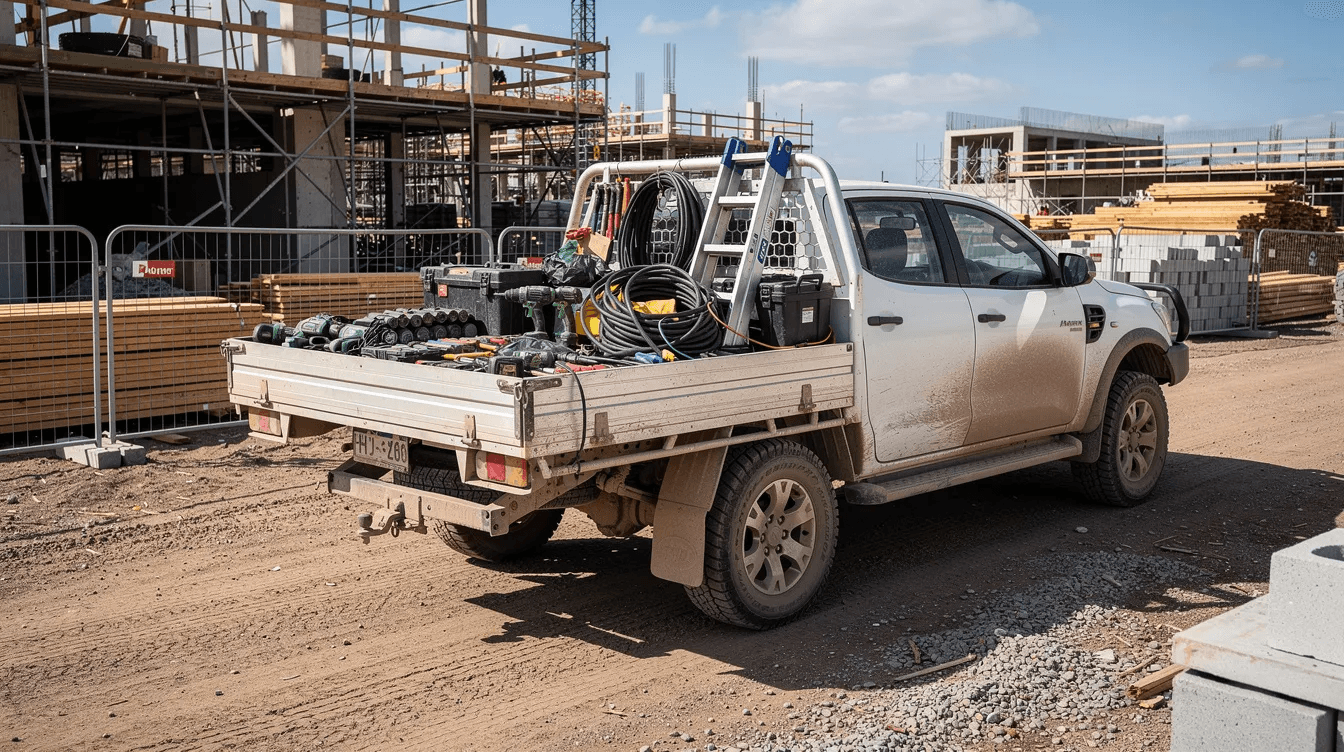
In the Australian business context, a chattel mortgage is a financing arrangement where a lender provides funds to purchase movable personal property - known as a "chattel" - and takes a security interest over that asset until the loan is repaid. Common chattels include utes, vans, trucks, excavators, forklifts, CNC machines, medical devices and office equipment.
This is a business loan, not a consumer car loan. The asset generally needs to be used more than 50% for business purposes to qualify. Chattel mortgages allow ownership of assets from day one: your business holds legal title at settlement, while the lender registers a security interest on the Personal Property Securities Register (PPSR) until the debt is cleared.
Flexible repayment terms range from one to seven years, typically at a fixed interest rate. Sole traders, partnerships, companies and trusts are all eligible. You might also see banks label this structure as a "goods loan," "business vehicle loan" or equipment loan - same mechanics, different name.
How does a chattel mortgage work step-by-step?
Obtaining a chattel mortgage follows a structured process from asset selection to repayment. Here's how it plays out in practice:
Step 1 - Choose the asset. Say you're a plumber buying a $65,000 work ute. You confirm the purchase price (including GST), whether it's new or used, and any trade-in.
Step 2 - Share your details. Provide your ABN, financials (bank statements, BAS, profit and loss) and business income details to a broker like GEA Capital. Lenders assess the creditworthiness of the business and the asset value before issuing credit approval.
Step 3 - Structure the loan. GEA compares lenders and structures the chattel mortgage - selecting the right loan term, upfront deposit (if any), repayment schedule and balloon payment percentage.
Step 4 - Settlement. The lender approves and pays the dealer directly. Your business takes immediate ownership of the vehicle or equipment.
Step 5 - Repayment. You make fixed monthly repayments of principal and interest over the loan period. If a balloon is included, that lump sum falls due as a final payment.
Step 6 - Discharge. Once all payments are made, the lender releases the security interest and ownership transfers to you completely - free of any lien.
Chattel mortgages can finance 100% of the asset's purchase price, so many businesses choose to preserve cash flow rather than tying up working capital in an upfront deposit. The lender's security is usually limited to the financed asset, though personal or director guarantees may apply.
On default: missed monthly payments can trigger late fees, default interest and - in serious cases - failure to make repayments allows the lender to repossess the asset. Structures can be tailored (seasonal repayments for farming, for example), which is where a broker adds real value.

Balloon payments explained
A balloon payment (also called a residual payment) is a lump sum due at the end of the loan term, separate from your normal monthly repayments. It reduces the amount of principal you repay each month, which lowers regular repayments during the loan term.
Here's how the numbers can look:
No balloon | 30% balloon ($21,000) | |
|---|---|---|
Asset's purchase price | $70,000 | $70,000 |
Loan term | 5 years | 5 years |
Approx. monthly repayments | ~$1,622 | ~$1,404 |
Total interest paid | Lower | Higher |
Balloon payments can improve cash flow for businesses - freeing up funds for wages, fuel and materials. They also let you match the repayment profile to the asset's expected resale value.
The risks? You need a plan for that final payment. If the asset value drops faster than expected, you may face negative equity. And higher balloon payments result in increased total interest costs over the life of the loan.
End-of-term options include paying from cash reserves, trading in the asset, or - you can refinance a balloon payment after the loan term, subject to credit approval. Lenders typically cap balloons at 20–40% depending on term and asset class.
What can you use a chattel mortgage to purchase?
Chattel mortgages are common for business vehicles and equipment across a wide range of industries. Here's what's typically eligible:
Business vehicles:
Utes, vans, sedans and SUVs used as a business vehicle
Light trucks, prime movers, trailers and fleet cars
Service vehicles for trades, transport and logistics
Business equipment and machinery:
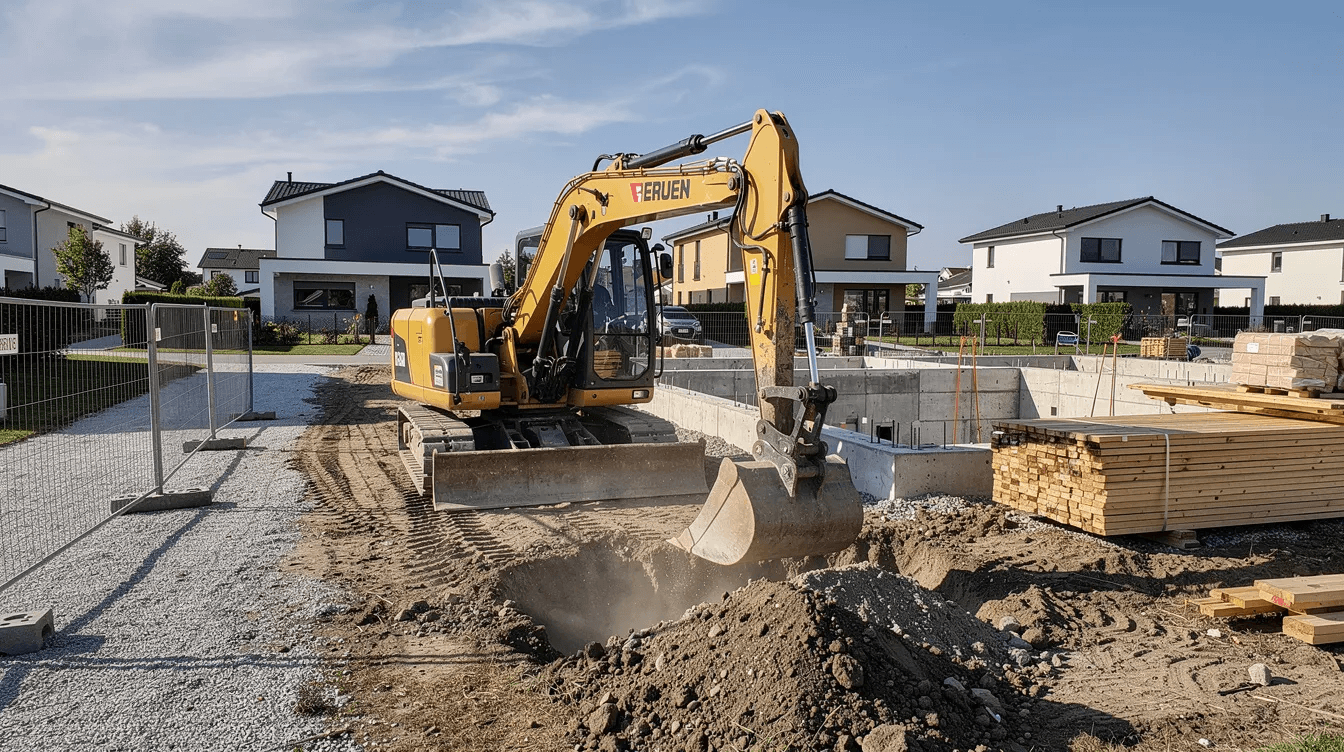
Construction equipment - excavators, skid steers, loaders
Agricultural machinery - tractors, harvesters
Manufacturing equipment - CNC machines, lathes
Medical and dental devices
Office technology - photocopiers, servers
Assets generally need to be income-producing business assets with a reasonably long effective life. Both new and used assets qualify, though used equipment may face stricter age and condition requirements.
GEA Capital regularly arranges chattel mortgages for professional and service businesses as well as trades, transport, healthcare, earthmoving and hospitality operators. Purely personal cars, hobby items and non-business equipment are usually financed under different loan structures.
Benefits of a chattel mortgage for your business
Many Australian businesses choose a chattel mortgage over a standard car loan for business related equipment and vehicle purchases. Here's why:
Immediate ownership. The asset sits on your balance sheet from day one as a business asset, strengthening your financial situation and asset backing.
Cash flow flexibility. Fixed repayments, choice of loan period (1–7 years) and optional balloon payments let you match outgoing costs to business income. Chattel mortgages help maintain cash flow with lower monthly repayments when a balloon is included.
Preserve working capital. Chattel mortgages typically finance 100% of the asset's purchase price, meaning you can avoid a large upfront deposit and keep cash available for stock, payroll and growth.
Certain tax benefits. Eligible businesses may be able to claim interest and depreciation costs as a business expense and potentially recover GST - though you should always seek your own independent tax advice.
Lower rates. Chattel mortgages can offer lower interest rates compared to unsecured loans because the loan is secured by the asset. Current indicative rates for SME borrowers sit around 7.95–10.95% p.a.
Simple security. The asset usually secures the business loan, reducing the need for property as collateral.
Tax and GST considerations (including claim tax deductions)
GEA Capital does not provide tax advice. Always confirm your eligibility with a registered tax agent or the ATO before relying on any tax treatment outlined below.
At a high level, businesses can claim tax deductions on interest and depreciation when a vehicle or equipment is used to generate assessable income. The interest paid on the chattel mortgage is generally tax deductible in the year incurred, proportional to business use. Businesses using cash accounting can claim depreciation as an expense - the depreciation value is calculated according to ATO rules, including any applicable instant asset write-off thresholds (currently a permanent $20,000 threshold, pending legislative confirmation).
GST-registered businesses can claim GST on the purchase price upfront. This input tax credit is typically claimed on your next business activity statement, even though the loan finances the GST-inclusive amount. For passenger vehicles, the GST credit is capped at one-eleventh of the ATO car limit - currently $69,883 (GST-exclusive) for 2026–27.
Whether you can claim tax deductions depends on your business structure, percentage of business use versus private use, vehicle type and the prevailing depreciation rules. Record-keeping is critical: maintain a logbook for business vehicle use, retain all tax invoices and keep loan statements to support deductions for interest and running costs.
GEA Capital's role is to structure the chattel mortgage alongside your accountant's professional advice - we handle the financing arrangement while your tax advisor confirms how it interacts with your tax planning.
Chattel mortgage vs lease vs hire purchase vs standard car loan
There are several ways to finance vehicles and essential assets for your business. Each has different ownership, tax and cash flow implications.
Feature | Chattel mortgage | Finance lease | Hire purchase | Car loan (consumer) |
|---|---|---|---|---|
Who owns the asset? | Business owns from day one | Lender owns during term | Eventual ownership after final payment | Borrower owns from settlement |
Tax deductions | Claim interest and depreciation | Lease payments may be deductible | Similar to chattel mortgage | Limited business deductions |
GST credit | Claimed upfront on purchase price | Claimed progressively on lease payments | Claimed upfront | Generally not applicable |
Balloon/residual | Optional | Residual common | Optional | Less common |
Best for | Business use >50% | Businesses wanting off-balance-sheet treatment | Businesses wanting gradual ownership transfers | Personal or mostly private use |
With a finance lease, the lender owns the asset during the term and the business pays regular lease payments. Tax treatment usually focuses on those payments rather than depreciation. With hire purchase, the business effectively hires the asset and obtains ownership after the final payment - sitting conceptually between a lease and a chattel mortgage. A standard car loan is typically used when primary use is personal, with different responsible lending rules and no services tax recovery.
GEA Capital can compare these financing agreements from multiple lenders and align the structure with your accountant's advice, risk appetite and cash flow goals. Check our FAQs for more on each finance option.
How GEA Capital can help you get a chattel mortgage
GEA Capital is a Melbourne-based, family-owned finance brokerage that arranges business chattel mortgages for Australian businesses of all sizes. We work with a panel of banks and specialist asset finance lenders - including those who support low-doc applications - to find competitive options for your next business vehicle or equipment purchase.
Our process:
Understand your needs - asset type, purchase price, financial situation and timeline
Review your profile - including cases where credit history isn't perfect
Compare offers - across our lender panel for the best interest rate, loan term and structure
Recommend a structure - term, deposit, balloon payment and repayment schedule tailored to your business
Manage the application - from credit approval through to settlement
Beyond chattel mortgages, we also assist with equipment finance, vehicle finance, cash flow lending and other business finance solutions - giving you a single point of contact for your funding needs.
If you're ready to purchase vehicles, equipment outright or simply want to explore whether a chattel mortgage suits your next asset purchase, reach out to GEA Capital for a tailored quote. We'll help you find the right finance option so you can focus on running your business.
How Does a Chattel Mortgage Work? (For Australian Business Vehicles & Equipment)
If you're looking at buying a work ute, van, excavator or any other business asset, you've likely come across the term chattel mortgage. Here's a practical breakdown of how this popular financing arrangement works, what it costs, and whether it suits your business.
Quick answer: how does a chattel mortgage work?
A chattel mortgage is a secured business loan used to purchase a vehicle or equipment, where your business owns the asset from day one and the asset itself serves as security for the loan. The loan term for a chattel mortgage typically ranges from 1 to 7 years, with fixed repayments made over that period.
The process is straightforward:
Choose the business vehicle or equipment you need
GEA Capital arranges a chattel mortgage with a suitable lender
The lender pays the supplier or dealer directly
Your business takes immediate ownership and starts using the asset
You make fixed monthly repayments over the agreed loan term
Once the loan (and any balloon payment) is fully repaid, the mortgage over the asset is removed
This structure is one of the most common forms of car and equipment finance in Australia. It can allow eligible businesses to claim tax deductions on interest and depreciation costs, and optional balloon payments can lower your regular repayments - more on that below.
What is a chattel mortgage?
In the Australian business context, a chattel mortgage is a financing arrangement where a lender provides funds to purchase movable personal property - known as a "chattel" - and takes a security interest over that asset until the loan is repaid. Common chattels include utes, vans, trucks, excavators, forklifts, CNC machines, medical devices and office equipment.
This is a business loan, not a consumer car loan. The asset generally needs to be used more than 50% for business purposes to qualify. Chattel mortgages allow ownership of assets from day one: your business holds legal title at settlement, while the lender registers a security interest on the Personal Property Securities Register (PPSR) until the debt is cleared.
Flexible repayment terms range from one to seven years, typically at a fixed interest rate. Sole traders, partnerships, companies and trusts are all eligible. You might also see banks label this structure as a "goods loan," "business vehicle loan" or equipment loan - same mechanics, different name.
How does a chattel mortgage work step-by-step?
Obtaining a chattel mortgage follows a structured process from asset selection to repayment. Here's how it plays out in practice:
Step 1 - Choose the asset. Say you're a plumber buying a $65,000 work ute. You confirm the purchase price (including GST), whether it's new or used, and any trade-in.
Step 2 - Share your details. Provide your ABN, financials (bank statements, BAS, profit and loss) and business income details to a broker like GEA Capital. Lenders assess the creditworthiness of the business and the asset value before issuing credit approval.
Step 3 - Structure the loan. GEA compares lenders and structures the chattel mortgage - selecting the right loan term, upfront deposit (if any), repayment schedule and balloon payment percentage.
Step 4 - Settlement. The lender approves and pays the dealer directly. Your business takes immediate ownership of the vehicle or equipment.
Step 5 - Repayment. You make fixed monthly repayments of principal and interest over the loan period. If a balloon is included, that lump sum falls due as a final payment.
Step 6 - Discharge. Once all payments are made, the lender releases the security interest and ownership transfers to you completely - free of any lien.
Chattel mortgages can finance 100% of the asset's purchase price, so many businesses choose to preserve cash flow rather than tying up working capital in an upfront deposit. The lender's security is usually limited to the financed asset, though personal or director guarantees may apply.
On default: missed monthly payments can trigger late fees, default interest and - in serious cases - failure to make repayments allows the lender to repossess the asset. Structures can be tailored (seasonal repayments for farming, for example), which is where a broker adds real value.
Balloon payments explained
A balloon payment (also called a residual payment) is a lump sum due at the end of the loan term, separate from your normal monthly repayments. It reduces the amount of principal you repay each month, which lowers regular repayments during the loan term.
Here's how the numbers can look:
No balloon | 30% balloon ($21,000) | |
|---|---|---|
Asset's purchase price | $70,000 | $70,000 |
Loan term | 5 years | 5 years |
Approx. monthly repayments | ~$1,622 | ~$1,404 |
Total interest paid | Lower | Higher |
Balloon payments can improve cash flow for businesses - freeing up funds for wages, fuel and materials. They also let you match the repayment profile to the asset's expected resale value.
The risks? You need a plan for that final payment. If the asset value drops faster than expected, you may face negative equity. And higher balloon payments result in increased total interest costs over the life of the loan.
End-of-term options include paying from cash reserves, trading in the asset, or - you can refinance a balloon payment after the loan term, subject to credit approval. Lenders typically cap balloons at 20–40% depending on term and asset class.
What can you use a chattel mortgage to purchase?
Chattel mortgages are common for business vehicles and equipment across a wide range of industries. Here's what's typically eligible:
Business vehicles:
Utes, vans, sedans and SUVs used as a business vehicle
Light trucks, prime movers, trailers and fleet cars
Service vehicles for trades, transport and logistics
Business equipment and machinery:
Construction equipment - excavators, skid steers, loaders
Agricultural machinery - tractors, harvesters
Manufacturing equipment - CNC machines, lathes
Medical and dental devices
Office technology - photocopiers, servers
Assets generally need to be income-producing business assets with a reasonably long effective life. Both new and used assets qualify, though used equipment may face stricter age and condition requirements.
GEA Capital regularly arranges chattel mortgages for professional and service businesses as well as trades, transport, healthcare, earthmoving and hospitality operators. Purely personal cars, hobby items and non-business equipment are usually financed under different loan structures.
Benefits of a chattel mortgage for your business
Many Australian businesses choose a chattel mortgage over a standard car loan for business related equipment and vehicle purchases. Here's why:
Immediate ownership. The asset sits on your balance sheet from day one as a business asset, strengthening your financial situation and asset backing.
Cash flow flexibility. Fixed repayments, choice of loan period (1–7 years) and optional balloon payments let you match outgoing costs to business income. Chattel mortgages help maintain cash flow with lower monthly repayments when a balloon is included.
Preserve working capital. Chattel mortgages typically finance 100% of the asset's purchase price, meaning you can avoid a large upfront deposit and keep cash available for stock, payroll and growth.
Certain tax benefits. Eligible businesses may be able to claim interest and depreciation costs as a business expense and potentially recover GST - though you should always seek your own independent tax advice.
Lower rates. Chattel mortgages can offer lower interest rates compared to unsecured loans because the loan is secured by the asset. Current indicative rates for SME borrowers sit around 7.95–10.95% p.a.
Simple security. The asset usually secures the business loan, reducing the need for property as collateral.
Tax and GST considerations (including claim tax deductions)
GEA Capital does not provide tax advice. Always confirm your eligibility with a registered tax agent or the ATO before relying on any tax treatment outlined below.
At a high level, businesses can claim tax deductions on interest and depreciation when a vehicle or equipment is used to generate assessable income. The interest paid on the chattel mortgage is generally tax deductible in the year incurred, proportional to business use. Businesses using cash accounting can claim depreciation as an expense - the depreciation value is calculated according to ATO rules, including any applicable instant asset write-off thresholds (currently a permanent $20,000 threshold, pending legislative confirmation).
GST-registered businesses can claim GST on the purchase price upfront. This input tax credit is typically claimed on your next business activity statement, even though the loan finances the GST-inclusive amount. For passenger vehicles, the GST credit is capped at one-eleventh of the ATO car limit - currently $69,883 (GST-exclusive) for 2026–27.
Whether you can claim tax deductions depends on your business structure, percentage of business use versus private use, vehicle type and the prevailing depreciation rules. Record-keeping is critical: maintain a logbook for business vehicle use, retain all tax invoices and keep loan statements to support deductions for interest and running costs.
GEA Capital's role is to structure the chattel mortgage alongside your accountant's professional advice - we handle the financing arrangement while your tax advisor confirms how it interacts with your tax planning.
Chattel mortgage vs lease vs hire purchase vs standard car loan
There are several ways to finance vehicles and essential assets for your business. Each has different ownership, tax and cash flow implications.
Feature | Chattel mortgage | Finance lease | Hire purchase | Car loan (consumer) |
|---|---|---|---|---|
Who owns the asset? | Business owns from day one | Lender owns during term | Eventual ownership after final payment | Borrower owns from settlement |
Tax deductions | Claim interest and depreciation | Lease payments may be deductible | Similar to chattel mortgage | Limited business deductions |
GST credit | Claimed upfront on purchase price | Claimed progressively on lease payments | Claimed upfront | Generally not applicable |
Balloon/residual | Optional | Residual common | Optional | Less common |
Best for | Business use >50% | Businesses wanting off-balance-sheet treatment | Businesses wanting gradual ownership transfers | Personal or mostly private use |
With a finance lease, the lender owns the asset during the term and the business pays regular lease payments. Tax treatment usually focuses on those payments rather than depreciation. With hire purchase, the business effectively hires the asset and obtains ownership after the final payment - sitting conceptually between a lease and a chattel mortgage. A standard car loan is typically used when primary use is personal, with different responsible lending rules and no services tax recovery.
GEA Capital can compare these financing agreements from multiple lenders and align the structure with your accountant's advice, risk appetite and cash flow goals. Check our FAQs for more on each finance option.
How GEA Capital can help you get a chattel mortgage
GEA Capital is a Melbourne-based, family-owned finance brokerage that arranges business chattel mortgages for Australian businesses of all sizes. We work with a panel of banks and specialist asset finance lenders - including those who support low-doc applications - to find competitive options for your next business vehicle or equipment purchase.
Our process:
Understand your needs - asset type, purchase price, financial situation and timeline
Review your profile - including cases where credit history isn't perfect
Compare offers - across our lender panel for the best interest rate, loan term and structure
Recommend a structure - term, deposit, balloon payment and repayment schedule tailored to your business
Manage the application - from credit approval through to settlement
Beyond chattel mortgages, we also assist with equipment finance, vehicle finance, cash flow lending and other business finance solutions - giving you a single point of contact for your funding needs.
If you're ready to purchase vehicles, equipment outright or simply want to explore whether a chattel mortgage suits your next asset purchase, reach out to GEA Capital for a tailored quote. We'll help you find the right finance option so you can focus on running your business.
Our Solutions
Gabriel Anagnostakis is an authorised credit representative (No. 562173) of Viking Asset Aggregation Pty Ltd, trading as GEA Capital (The Trustee for GEA Family Trust, ABN: 76 533 017 761). Australian Credit licence Number 543046 and is authorised to provide credit related activities.

Our Solutions
Gabriel Anagnostakis is an authorised credit representative (No. 562173) of Viking Asset Aggregation Pty Ltd, trading as GEA Capital (The Trustee for GEA Family Trust, ABN: 76 533 017 761). Australian Credit licence Number 543046 and is authorised to provide credit related activities.
Our Solutions
Gabriel Anagnostakis is an authorised credit representative (No. 562173) of Viking Asset Aggregation Pty Ltd, trading as GEA Capital (The Trustee for GEA Family Trust, ABN: 76 533 017 761). Australian Credit licence Number 543046 and is authorised to provide credit related activities.
Our Solutions
Gabriel Anagnostakis is an authorised credit representative (No. 562173) of Viking Asset Aggregation Pty Ltd, trading as GEA Capital (The Trustee for GEA Family Trust, ABN: 76 533 017 761). Australian Credit licence Number 543046 and is authorised to provide credit related activities.