How Does GST Work on a Chattel Mortgage?

How Does GST Work on a Chattel Mortgage?
If you run a business in Australia and you're financing a vehicle, truck, or piece of equipment, understanding how GST interacts with a chattel mortgage can make a real difference to your cash flow. The good news: the rules are more straightforward than most people expect. Here's what you need to know.
Quick answer: how GST works on a chattel mortgage
With a chattel mortgage, the goods and services tax applies to the purchase price of the asset - not to the loan repayments. GST is charged by the dealer or supplier when you buy the car, truck, or business equipment. It has nothing to do with how you finance it.
For GST registered businesses using the asset predominantly for business purposes, the full GST on the purchase price is usually claimable as an input tax credit on the next business activity statement. A valid tax invoice must be held to claim GST on the BAS.
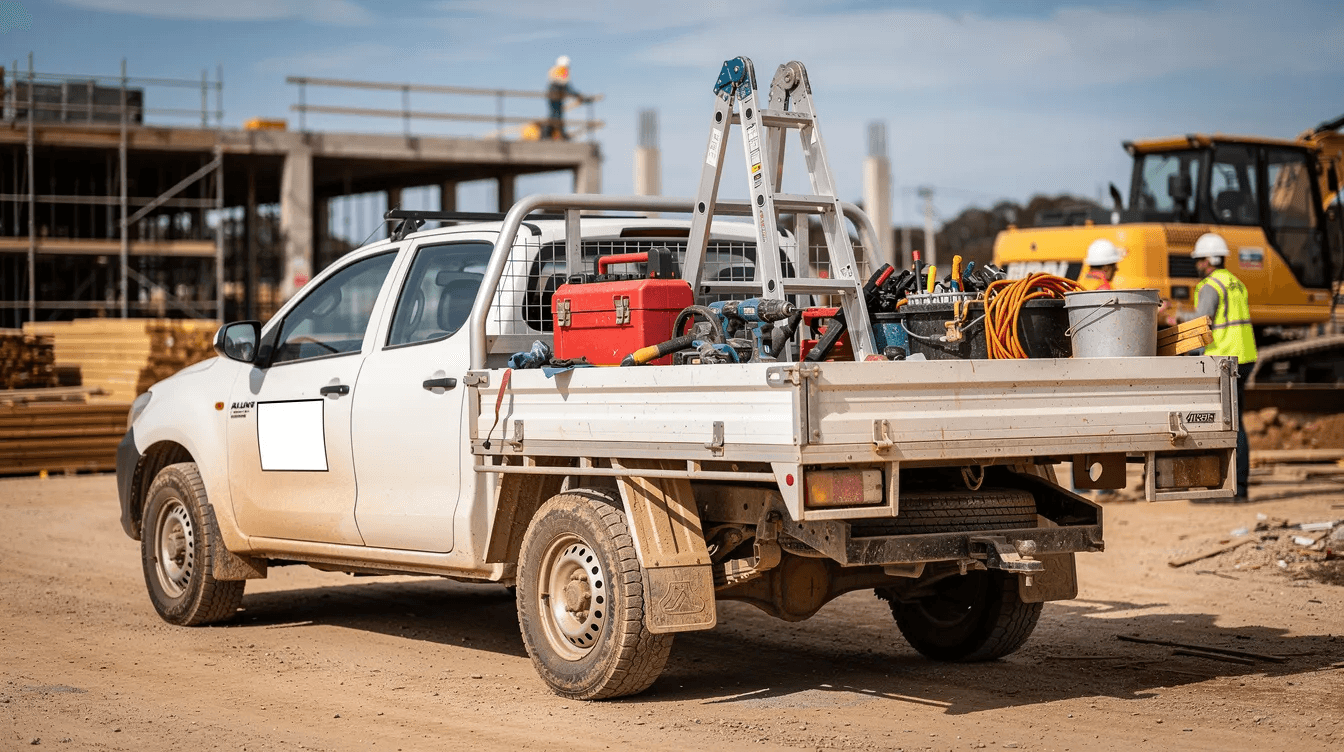
Here's a simple example. Say you buy a work ute in July 2026 for AU$66,000 including GST. The GST component is AU$6,000. If you're registered for GST and use the ute mainly for business, you can generally claim that AU$6,000 back on your July–September 2026 BAS.
Monthly chattel mortgage repayments - covering principal and interest - do not include GST. No GST is charged on monthly loan repayments or final balloon payments. However, you may separately claim income tax deductions for interest paid and car or asset depreciation.
Keep in mind that GST treatment for a chattel mortgage differs from standard lease or rental structures. On a finance lease, GST is embedded in each rental payment. On a commercial hire purchase, the rules changed in 2012. Structure choice matters.
GEA Capital acts as a finance broker, not a tax adviser. Always confirm GST and income tax outcomes with your accountant before committing to a structure.
What is a chattel mortgage? (clear definition for Australian businesses)
A chattel mortgage is a type of car and equipment finance where the business owns the asset from day one. The lender takes a security interest - a mortgage - over the movable property (the "chattel") until the loan is repaid.
Chattels include cars, vans, trucks, earthmoving gear, dental equipment, IT hardware, and virtually any other movable business equipment. The lender registers its interest on the Personal Property Securities Register (PPSR) and removes it once the loan is cleared.
Chattel mortgages provide ownership of the asset immediately. This is what separates them from a finance lease, where the lender owns the asset. Many banks and lenders simply market chattel mortgages as a "business car loan" or "equipment loan."
Unlike a consumer car loan used for personal purposes - where GST credits and depreciation are generally irrelevant to the borrower - a chattel mortgage is designed for business use, unlocking both GST and ongoing tax deductions.
GEA Capital arranges chattel mortgages through a panel of lenders for SMEs, sole traders, and companies across Australia.
How a chattel mortgage works in practice
Here's the typical flow:
You choose a vehicle or piece of business equipment and get a quote or tax invoice from the supplier.
GEA Capital sources chattel mortgage options from its lender panel, comparing interest rates, loan term options, and balloon structures.
After lender approval, the lender pays the supplier directly at settlement.
You take legal ownership immediately and start using the asset for business activities.
You make fixed repayments over an agreed term - chattel mortgage terms range from one to seven years for vehicles, and three to five years for most equipment.
The lender registers a security interest over the asset and removes it once the balance and any final payment are fully paid.
Because you own the asset outright (not leasing it), you're responsible for insurance, running costs, and deciding when to sell or upgrade. This asset ownership is also what allows the business to claim depreciation, interest deductions, and - where eligible - GST input tax credits on the purchase price.
How does a chattel mortgage work for GST specifically?
When you buy an asset under a chattel mortgage, the tax invoice from the dealer or supplier includes GST on the full purchase price. For example, a piece of equipment listed at AU$110,000 includes AU$10,000 GST.
The financing itself is simply a loan. The GST event is the purchase of the asset, not the stream of repayments to the finance company. This is fundamentally different from a finance lease, where GST is charged on each periodic rental.
A GST registered business that uses the asset for creditable business use can usually claim the GST shown on the supplier's invoice as a full input tax credit on its next BAS. Businesses can claim full GST on chattel mortgages, provided they meet the registration and creditable-purpose tests.
No GST is charged on the chattel mortgage repayments themselves. Interest charges on the loan are generally input taxed and not subject to GST. Loan establishment fees and principal or interest charges are financial supplies and do not attract GST either, though some ancillary fees may include GST.
If the asset is used partly for private purposes, the GST claim must be reduced proportionally. For business use, only the percentage of GST that matches actual business use can be claimed. Keep dealer tax invoices, finance contracts, and logbooks as evidence for the ATO.
GST input tax credit: timing and examples
For most businesses on a non-cash (accruals) basis, the full GST amount on the tax invoice can be claimed in the BAS period when the invoice is issued or the asset is acquired.
For businesses on a cash basis, the ATO generally allows a full input tax credit once the purchase price has effectively been paid using borrowed funds under a chattel mortgage, provided a valid tax invoice is held.
Worked example: You purchase an excavator on 10 August 2026 for AU$220,000 including AU$20,000 GST under a chattel mortgage. You're GST registered and use it 100% for business. You claim the AU$20,000 as an input tax credit on your August–October 2026 BAS.

This upfront GST credit is a significant cash flow advantage. Compare this with a finance lease, where GST is spread across lease rentals and you claim a portion each BAS period. Under a chattel mortgage, chattel mortgages enable claiming GST upfront for business assets - the full amount hits your next business activity statement rather than trickling in over years.
If a business later ceases to be GST registered, or changes the use of the asset significantly, later GST adjustments may be required under ATO rules.
GST limits and special rules for cars
Not every vehicle gets the same GST treatment. The ATO imposes a car depreciation limit for passenger vehicles designed to carry fewer than nine passengers and less than one tonne of load.
For the 2025–26 financial year, the car limit is AU$69,674. The maximum GST credit for passenger vehicles is capped at 1/11th of that limit - approximately AU$6,334.
Example: You buy a luxury sedan for AU$90,000 (including GST) under a chattel mortgage. Even though the GST on the full price would be AU$8,182, your maximum GST credit is capped at AU$6,334.
This cap does not apply to heavy commercial vehicles, utes with over one-tonne payload, buses, or most earthmoving and dental equipment. For predominantly business use commercial vehicles, the full GST on the invoice is often claimable.
Where there is significant private use, businesses must apportion GST claims - often supported by a logbook over a representative 12-week period. Only the documented business use percentage is eligible.
Chattel mortgage vs finance lease vs hire purchase – GST differences
The GST outcome depends heavily on which finance option you choose. Here's a quick comparison:
Feature | Chattel mortgage | Finance lease | Commercial hire purchase |
|---|---|---|---|
Asset ownership during term | You own | Lender owns | Lender owns until final payment |
GST credit timing | Upfront on purchase price | Gradually, on each rental | Similar to chattel mortgage (post-2012 rules vary) |
GST on repayments | No | Yes (included in rentals) | Varies |
Balance sheet treatment | Asset on your books | May be off-balance sheet (older rules) | Asset on your books at end |
With a chattel mortgage, GST is generally claimed upfront on the purchase price, while repayments are GST-free. With a finance lease, GST is embedded in every periodic payment and claimed gradually. Chattel mortgages differ from finance leases in asset ownership - you own from day one.
Commercial hire purchase GST treatment changed from 1 July 2012, making it less attractive for many Australian businesses compared with chattel mortgages.
A finance lease might still suit entities that prefer off-balance sheet presentation or are not GST registered. But for GST registered businesses seeking upfront tax benefits, a chattel mortgage often delivers stronger GST and income tax outcomes.
Balloon payments and GST: what really happens
A balloon payment (also called a residual payment) is a final lump sum due at the end of the loan term - typically between 10% and 40% of the original amount. A balloon payment can reduce monthly repayments significantly by deferring part of the principal.
The critical point: GST on a chattel mortgage is calculated on the full purchase price at the start, not recalculated when the balloon is paid.
Example: You finance a AU$77,000 GST-inclusive vehicle with a 30% balloon. The GST component is AU$7,000. Your input tax credit is AU$7,000 at purchase, regardless of the balloon structure. There is no separate GST on the final lump sum.
If you sell or trade in the asset at the end of the term to clear the balloon, that sale may be a taxable supply and include GST payable on the sale price if you're still registered.
Make sure the future balloon is realistic given expected residual value and depreciation - an unrealistic balloon creates cash flow stress at the end of the term.
What happens with GST on early payout, sale or refinance?
You can pay off a chattel mortgage early, but fees may apply depending on your lender. Paying out a chattel mortgage early does not generate new GST on the finance itself - the purchase GST event happened at the outset.
If you sell the asset while GST registered and the asset is used in your enterprise, the sale price will usually be subject to GST, which must be reported on the relevant BAS. The GST paid on the original purchase was already claimed; now you report GST on the disposal.
Where business use percentage changes significantly, or the business deregisters for GST, there may be adjustment events affecting prior input tax credits claimed.
Refinancing a chattel mortgage into a new facility does not typically recreate GST on the same asset purchase, but GST can arise on any new fees charged by the financier.
Speak with your accountant before making an early payout or restructure, especially where the original input tax credit was material.
Income tax benefits separate from GST (interest, depreciation, instant asset write-off)
Getting GST back on the purchase does not remove your ability to claim depreciation or deduct interest on the chattel mortgage. These are separate streams of tax deduction.
Under a chattel mortgage, you can:
Claim depreciation on the asset's cost (net of GST credits claimed). Businesses can claim 15% depreciation in the first year under standard rules, with accelerated depreciation available under certain concessions.
Deduct interest paid on the loan as a business expense. Interest on chattel mortgages is tax deductible - only the interest component of repayments is deductible, not the principal.
Use the instant asset write-off or simplified depreciation rules where eligible. From 1 July 2026, the AU$20,000 instant asset write-off threshold is expected to be made permanent for eligible businesses.
Worked example: You finance an AU$80,000 (ex-GST) work ute over five years at roughly 8.5% interest. Over the full loan term, you'd pay approximately AU$18,000–$20,000 in total interest - all of which is tax deductible against your business income, reducing your taxable income each financial year. You'd also claim depreciation annually, and the GST credit of roughly AU$7,270 hits your first BAS.
These ongoing tax deductions - interest deductions plus depreciation - improve your overall tax position year after year.
Rules and thresholds (the car depreciation limit, instant asset write-off cap, company tax rate) change over time. Professional tax advice is essential.
When a chattel mortgage makes sense – and when it may not
A chattel mortgage is often the strongest finance option when:
Your business is GST registered and can claim the upfront GST credit
The asset will be used predominantly for business purposes
You want the asset on your balance sheet and want to claim depreciation
You prefer asset free of lender ownership from day one
You want ongoing tax deductions for interest and depreciation against business income
It may not be ideal when:
You're not GST registered - no input tax benefit
Business use is low, limiting the GST credit and tax deduction
You prefer fully deductible lease payments rather than managing depreciation on your financial statements
The purchase is very small - a secured business loan, overdraft, or straightforward process like a small business loan might be simpler
You have specific balance sheet or credit history concerns that make a different structure preferable
Most lenders offer chattel mortgages alongside other products. Discuss your options with GEA Capital so GST, income tax, and cash flow outcomes are all considered together.
How GEA Capital helps you structure GST-effective car and equipment finance
GEA Capital is a Melbourne-based, family-owned finance brokerage arranging chattel mortgages, finance leases, and other equipment finance solutions nationally. The team compares multiple lenders to find options that suit your asset type, business use, upfront deposit, desired balloon payment, and expected ownership period.
GEA Capital works alongside your accountant to ensure the chosen structure supports your GST and income tax strategy - not undermines it. Whether you need to finance vehicles, heavy machinery, or specialist dental equipment, the straightforward process starts with a conversation about what you need and how you plan to use the asset.
Applications can often be assessed quickly, including for clients with less-than-perfect credit history, provided affordability and business use can be demonstrated. Interest rates for chattel mortgages currently range from about 7.95% to 10.95% depending on the asset type and borrower risk profile.
Ready to find out exactly how the GST would work for your specific car or equipment purchase? Contact GEA Capital today for a tailored chattel mortgage quote and take the guesswork out of your next asset finance decision.
How Does GST Work on a Chattel Mortgage?
If you run a business in Australia and you're financing a vehicle, truck, or piece of equipment, understanding how GST interacts with a chattel mortgage can make a real difference to your cash flow. The good news: the rules are more straightforward than most people expect. Here's what you need to know.
Quick answer: how GST works on a chattel mortgage
With a chattel mortgage, the goods and services tax applies to the purchase price of the asset - not to the loan repayments. GST is charged by the dealer or supplier when you buy the car, truck, or business equipment. It has nothing to do with how you finance it.
For GST registered businesses using the asset predominantly for business purposes, the full GST on the purchase price is usually claimable as an input tax credit on the next business activity statement. A valid tax invoice must be held to claim GST on the BAS.
Here's a simple example. Say you buy a work ute in July 2026 for AU$66,000 including GST. The GST component is AU$6,000. If you're registered for GST and use the ute mainly for business, you can generally claim that AU$6,000 back on your July–September 2026 BAS.
Monthly chattel mortgage repayments - covering principal and interest - do not include GST. No GST is charged on monthly loan repayments or final balloon payments. However, you may separately claim income tax deductions for interest paid and car or asset depreciation.
Keep in mind that GST treatment for a chattel mortgage differs from standard lease or rental structures. On a finance lease, GST is embedded in each rental payment. On a commercial hire purchase, the rules changed in 2012. Structure choice matters.
GEA Capital acts as a finance broker, not a tax adviser. Always confirm GST and income tax outcomes with your accountant before committing to a structure.
What is a chattel mortgage? (clear definition for Australian businesses)
A chattel mortgage is a type of car and equipment finance where the business owns the asset from day one. The lender takes a security interest - a mortgage - over the movable property (the "chattel") until the loan is repaid.
Chattels include cars, vans, trucks, earthmoving gear, dental equipment, IT hardware, and virtually any other movable business equipment. The lender registers its interest on the Personal Property Securities Register (PPSR) and removes it once the loan is cleared.
Chattel mortgages provide ownership of the asset immediately. This is what separates them from a finance lease, where the lender owns the asset. Many banks and lenders simply market chattel mortgages as a "business car loan" or "equipment loan."
Unlike a consumer car loan used for personal purposes - where GST credits and depreciation are generally irrelevant to the borrower - a chattel mortgage is designed for business use, unlocking both GST and ongoing tax deductions.
GEA Capital arranges chattel mortgages through a panel of lenders for SMEs, sole traders, and companies across Australia.
How a chattel mortgage works in practice
Here's the typical flow:
You choose a vehicle or piece of business equipment and get a quote or tax invoice from the supplier.
GEA Capital sources chattel mortgage options from its lender panel, comparing interest rates, loan term options, and balloon structures.
After lender approval, the lender pays the supplier directly at settlement.
You take legal ownership immediately and start using the asset for business activities.
You make fixed repayments over an agreed term - chattel mortgage terms range from one to seven years for vehicles, and three to five years for most equipment.
The lender registers a security interest over the asset and removes it once the balance and any final payment are fully paid.
Because you own the asset outright (not leasing it), you're responsible for insurance, running costs, and deciding when to sell or upgrade. This asset ownership is also what allows the business to claim depreciation, interest deductions, and - where eligible - GST input tax credits on the purchase price.
How does a chattel mortgage work for GST specifically?
When you buy an asset under a chattel mortgage, the tax invoice from the dealer or supplier includes GST on the full purchase price. For example, a piece of equipment listed at AU$110,000 includes AU$10,000 GST.
The financing itself is simply a loan. The GST event is the purchase of the asset, not the stream of repayments to the finance company. This is fundamentally different from a finance lease, where GST is charged on each periodic rental.
A GST registered business that uses the asset for creditable business use can usually claim the GST shown on the supplier's invoice as a full input tax credit on its next BAS. Businesses can claim full GST on chattel mortgages, provided they meet the registration and creditable-purpose tests.
No GST is charged on the chattel mortgage repayments themselves. Interest charges on the loan are generally input taxed and not subject to GST. Loan establishment fees and principal or interest charges are financial supplies and do not attract GST either, though some ancillary fees may include GST.
If the asset is used partly for private purposes, the GST claim must be reduced proportionally. For business use, only the percentage of GST that matches actual business use can be claimed. Keep dealer tax invoices, finance contracts, and logbooks as evidence for the ATO.
GST input tax credit: timing and examples
For most businesses on a non-cash (accruals) basis, the full GST amount on the tax invoice can be claimed in the BAS period when the invoice is issued or the asset is acquired.
For businesses on a cash basis, the ATO generally allows a full input tax credit once the purchase price has effectively been paid using borrowed funds under a chattel mortgage, provided a valid tax invoice is held.
Worked example: You purchase an excavator on 10 August 2026 for AU$220,000 including AU$20,000 GST under a chattel mortgage. You're GST registered and use it 100% for business. You claim the AU$20,000 as an input tax credit on your August–October 2026 BAS.
This upfront GST credit is a significant cash flow advantage. Compare this with a finance lease, where GST is spread across lease rentals and you claim a portion each BAS period. Under a chattel mortgage, chattel mortgages enable claiming GST upfront for business assets - the full amount hits your next business activity statement rather than trickling in over years.
If a business later ceases to be GST registered, or changes the use of the asset significantly, later GST adjustments may be required under ATO rules.
GST limits and special rules for cars
Not every vehicle gets the same GST treatment. The ATO imposes a car depreciation limit for passenger vehicles designed to carry fewer than nine passengers and less than one tonne of load.
For the 2025–26 financial year, the car limit is AU$69,674. The maximum GST credit for passenger vehicles is capped at 1/11th of that limit - approximately AU$6,334.
Example: You buy a luxury sedan for AU$90,000 (including GST) under a chattel mortgage. Even though the GST on the full price would be AU$8,182, your maximum GST credit is capped at AU$6,334.
This cap does not apply to heavy commercial vehicles, utes with over one-tonne payload, buses, or most earthmoving and dental equipment. For predominantly business use commercial vehicles, the full GST on the invoice is often claimable.
Where there is significant private use, businesses must apportion GST claims - often supported by a logbook over a representative 12-week period. Only the documented business use percentage is eligible.
Chattel mortgage vs finance lease vs hire purchase – GST differences
The GST outcome depends heavily on which finance option you choose. Here's a quick comparison:
Feature | Chattel mortgage | Finance lease | Commercial hire purchase |
|---|---|---|---|
Asset ownership during term | You own | Lender owns | Lender owns until final payment |
GST credit timing | Upfront on purchase price | Gradually, on each rental | Similar to chattel mortgage (post-2012 rules vary) |
GST on repayments | No | Yes (included in rentals) | Varies |
Balance sheet treatment | Asset on your books | May be off-balance sheet (older rules) | Asset on your books at end |
With a chattel mortgage, GST is generally claimed upfront on the purchase price, while repayments are GST-free. With a finance lease, GST is embedded in every periodic payment and claimed gradually. Chattel mortgages differ from finance leases in asset ownership - you own from day one.
Commercial hire purchase GST treatment changed from 1 July 2012, making it less attractive for many Australian businesses compared with chattel mortgages.
A finance lease might still suit entities that prefer off-balance sheet presentation or are not GST registered. But for GST registered businesses seeking upfront tax benefits, a chattel mortgage often delivers stronger GST and income tax outcomes.
Balloon payments and GST: what really happens
A balloon payment (also called a residual payment) is a final lump sum due at the end of the loan term - typically between 10% and 40% of the original amount. A balloon payment can reduce monthly repayments significantly by deferring part of the principal.
The critical point: GST on a chattel mortgage is calculated on the full purchase price at the start, not recalculated when the balloon is paid.
Example: You finance a AU$77,000 GST-inclusive vehicle with a 30% balloon. The GST component is AU$7,000. Your input tax credit is AU$7,000 at purchase, regardless of the balloon structure. There is no separate GST on the final lump sum.
If you sell or trade in the asset at the end of the term to clear the balloon, that sale may be a taxable supply and include GST payable on the sale price if you're still registered.
Make sure the future balloon is realistic given expected residual value and depreciation - an unrealistic balloon creates cash flow stress at the end of the term.
What happens with GST on early payout, sale or refinance?
You can pay off a chattel mortgage early, but fees may apply depending on your lender. Paying out a chattel mortgage early does not generate new GST on the finance itself - the purchase GST event happened at the outset.
If you sell the asset while GST registered and the asset is used in your enterprise, the sale price will usually be subject to GST, which must be reported on the relevant BAS. The GST paid on the original purchase was already claimed; now you report GST on the disposal.
Where business use percentage changes significantly, or the business deregisters for GST, there may be adjustment events affecting prior input tax credits claimed.
Refinancing a chattel mortgage into a new facility does not typically recreate GST on the same asset purchase, but GST can arise on any new fees charged by the financier.
Speak with your accountant before making an early payout or restructure, especially where the original input tax credit was material.
Income tax benefits separate from GST (interest, depreciation, instant asset write-off)
Getting GST back on the purchase does not remove your ability to claim depreciation or deduct interest on the chattel mortgage. These are separate streams of tax deduction.
Under a chattel mortgage, you can:
Claim depreciation on the asset's cost (net of GST credits claimed). Businesses can claim 15% depreciation in the first year under standard rules, with accelerated depreciation available under certain concessions.
Deduct interest paid on the loan as a business expense. Interest on chattel mortgages is tax deductible - only the interest component of repayments is deductible, not the principal.
Use the instant asset write-off or simplified depreciation rules where eligible. From 1 July 2026, the AU$20,000 instant asset write-off threshold is expected to be made permanent for eligible businesses.
Worked example: You finance an AU$80,000 (ex-GST) work ute over five years at roughly 8.5% interest. Over the full loan term, you'd pay approximately AU$18,000–$20,000 in total interest - all of which is tax deductible against your business income, reducing your taxable income each financial year. You'd also claim depreciation annually, and the GST credit of roughly AU$7,270 hits your first BAS.
These ongoing tax deductions - interest deductions plus depreciation - improve your overall tax position year after year.
Rules and thresholds (the car depreciation limit, instant asset write-off cap, company tax rate) change over time. Professional tax advice is essential.
When a chattel mortgage makes sense – and when it may not
A chattel mortgage is often the strongest finance option when:
Your business is GST registered and can claim the upfront GST credit
The asset will be used predominantly for business purposes
You want the asset on your balance sheet and want to claim depreciation
You prefer asset free of lender ownership from day one
You want ongoing tax deductions for interest and depreciation against business income
It may not be ideal when:
You're not GST registered - no input tax benefit
Business use is low, limiting the GST credit and tax deduction
You prefer fully deductible lease payments rather than managing depreciation on your financial statements
The purchase is very small - a secured business loan, overdraft, or straightforward process like a small business loan might be simpler
You have specific balance sheet or credit history concerns that make a different structure preferable
Most lenders offer chattel mortgages alongside other products. Discuss your options with GEA Capital so GST, income tax, and cash flow outcomes are all considered together.
How GEA Capital helps you structure GST-effective car and equipment finance
GEA Capital is a Melbourne-based, family-owned finance brokerage arranging chattel mortgages, finance leases, and other equipment finance solutions nationally. The team compares multiple lenders to find options that suit your asset type, business use, upfront deposit, desired balloon payment, and expected ownership period.
GEA Capital works alongside your accountant to ensure the chosen structure supports your GST and income tax strategy - not undermines it. Whether you need to finance vehicles, heavy machinery, or specialist dental equipment, the straightforward process starts with a conversation about what you need and how you plan to use the asset.
Applications can often be assessed quickly, including for clients with less-than-perfect credit history, provided affordability and business use can be demonstrated. Interest rates for chattel mortgages currently range from about 7.95% to 10.95% depending on the asset type and borrower risk profile.
Ready to find out exactly how the GST would work for your specific car or equipment purchase? Contact GEA Capital today for a tailored chattel mortgage quote and take the guesswork out of your next asset finance decision.
Our Solutions
Gabriel Anagnostakis is an authorised credit representative (No. 562173) of Viking Asset Aggregation Pty Ltd, trading as GEA Capital (The Trustee for GEA Family Trust, ABN: 76 533 017 761). Australian Credit licence Number 543046 and is authorised to provide credit related activities.

Our Solutions
Gabriel Anagnostakis is an authorised credit representative (No. 562173) of Viking Asset Aggregation Pty Ltd, trading as GEA Capital (The Trustee for GEA Family Trust, ABN: 76 533 017 761). Australian Credit licence Number 543046 and is authorised to provide credit related activities.
Our Solutions
Gabriel Anagnostakis is an authorised credit representative (No. 562173) of Viking Asset Aggregation Pty Ltd, trading as GEA Capital (The Trustee for GEA Family Trust, ABN: 76 533 017 761). Australian Credit licence Number 543046 and is authorised to provide credit related activities.
Our Solutions
Gabriel Anagnostakis is an authorised credit representative (No. 562173) of Viking Asset Aggregation Pty Ltd, trading as GEA Capital (The Trustee for GEA Family Trust, ABN: 76 533 017 761). Australian Credit licence Number 543046 and is authorised to provide credit related activities.